Mini Militia control settings
Understanding Mini Militia Control Settings
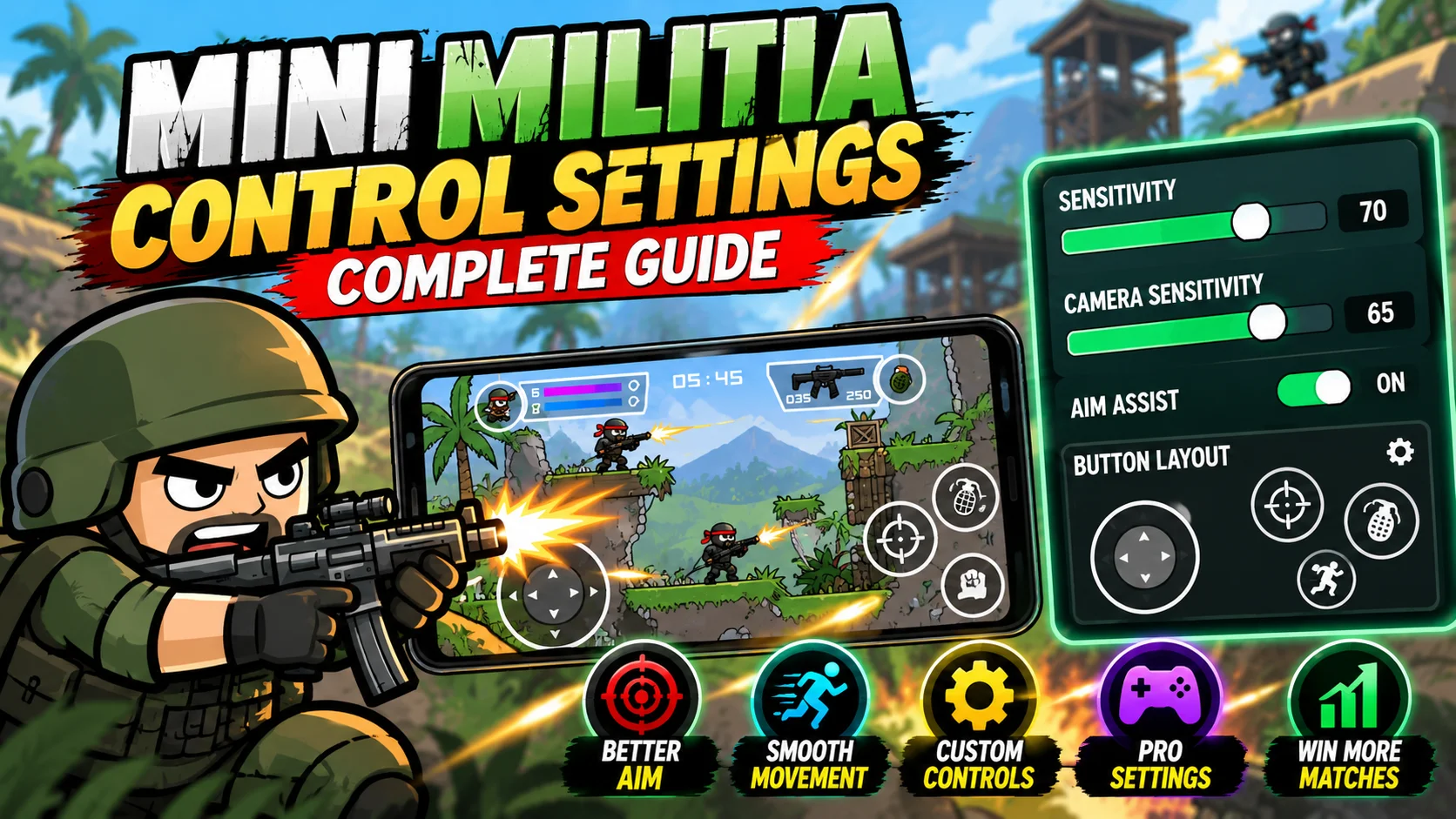
Your Mini Militia control settings determine how you interact with the game. The right adjustments can be the difference between victory and defeat. Whether you’re a mobile gamer new to Mini Militia or someone looking to improve your gameplay, understanding and optimizing your control settings is essential. This comprehensive guide covers everything you need to know about configuring your controls for maximum performance.
Types of Control Settings in Mini Militia
Overview of Control Customization
Mini Militia offers extensive control customization options. Unlike many mobile games that lock you into one control scheme, Mini Militia lets you adjust nearly every aspect of how you interact with the game. This flexibility allows players with different preferences to find settings that work for them.
The main control settings categories include joystick sensitivity, button positioning, and layout preferences. Each of these affects your gaming experience in different ways. Understanding what each setting does helps you make informed decisions about your configuration.
Joystick and Movement Controls
Movement is the foundation of any multiplayer shooter. In Mini Militia, you control your character using either analog sticks or directional buttons. Most players prefer the joystick control system because it offers more precise movement compared to traditional D-pad controls.
Your joystick settings include the position of the movement stick on your screen. You can typically place it on the left or right side of your display. The position affects how comfortable it feels during extended play sessions. Left-handed players often benefit from moving the movement stick to the right side of the screen.
| Control Setting | Description | Impact |
|---|---|---|
| Joystick Position | Left or right side of screen | Comfort and accessibility |
| Joystick Size | Small, medium, or large | Precision and thumb space |
| Camera Sensitivity | 1-100 scale | Aiming speed and precision |
| Look Sensitivity | Independent from movement | Vertical and horizontal aiming |
Camera and Aiming Sensitivity Settings
What is Camera Sensitivity?
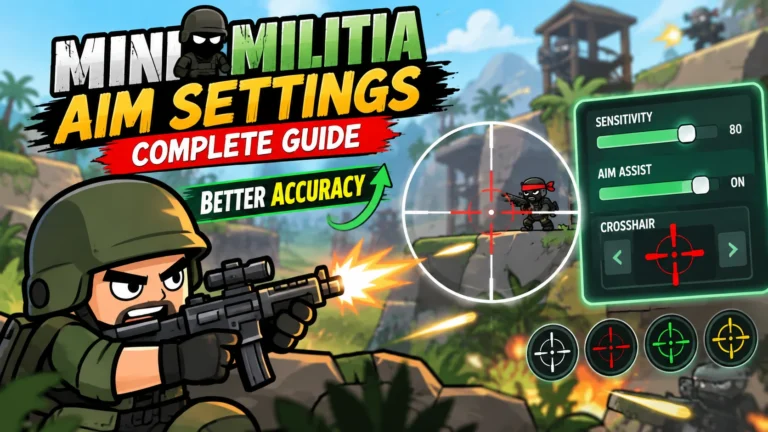
Camera sensitivity determines how fast your view rotates when you move your aiming stick. Lower sensitivity means you need to make larger stick movements to turn your view. Higher sensitivity lets you turn quickly with smaller movements.
Finding your ideal sensitivity is personal. It depends on your playstyle, how familiar you are with the game, and your finger dexterity. Most beginners start with medium sensitivity and adjust from there based on their comfort level.
Recommended Sensitivity Settings by Skill Level
Beginner Players: Start with sensitivity around 30-40. This gives you enough control to learn the game without making aiming too difficult. As you improve, you can gradually increase it.
Intermediate Players: Most intermediate players find comfort in the 50-70 range. This allows for responsive aiming while maintaining reasonable accuracy. Many competitive players start experimenting at this level.
Advanced Players: Experienced players often prefer 70-90 sensitivity. Higher sensitivity enables quick target switching and rapid response times in intense firefights. Pro players frequently use maximum sensitivity with their playstyle optimized around it.
Vertical and Horizontal Sensitivity Adjustment
Some Mini Militia versions allow separate adjustment of vertical and horizontal sensitivity. This advanced setting helps players who struggle with either up-down or left-right aiming.
Many players set vertical sensitivity slightly lower than horizontal sensitivity. This prevents overaiming when tracking enemies vertically, which is harder to control precisely than horizontal movement.
Pro Player Insight
Top Mini Militia players spend time in practice matches testing different sensitivities. They don’t jump into ranked games with new settings. This testing phase helps them understand how their sensitivity affects their performance in realistic game scenarios.
Button Layout and Custom Controls
Standard Button Positions
Mini Militia lets you customize where different action buttons appear on your screen. Common buttons include shoot, aim, jump, and reload. Their default positions might not feel natural to you.
The right-side aiming button controls your crosshair. Many players prefer larger aiming buttons because precision matters in gunfights. Some players also adjust their fire button size to match their preferred button-press area.
Weapon Selection Controls
Quick weapon switching is crucial in Mini Militia. You can customize how you access different weapons. Some players prefer sliding buttons that appear when needed. Others like dedicated buttons always visible on screen.
Think about your playstyle when configuring weapon buttons. If you switch weapons frequently, having quick-access buttons makes sense. If you stick with one weapon most of the time, less screen space dedicated to weapons buttons gives you better visibility.
Crouch and Movement Modifiers
Crouching reduces your visibility and improves shooting accuracy. Your crouch button position affects how quickly you can activate it during combat. Some players place it near their aiming finger for quick access.
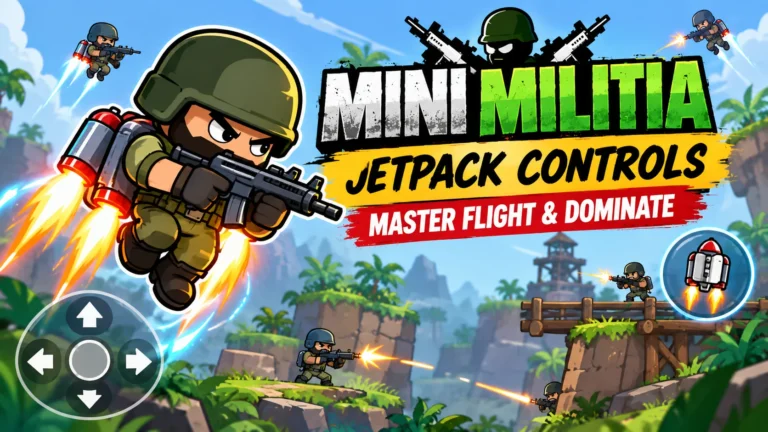
Jet pack controls (if your game mode includes them) also need accessible positioning. The same applies to other movement modifiers. Quick access means better response times in critical moments.
Pro Tips for Optimizing Your Control Settings
Test Before Committing
Always test new control settings in practice matches or casual games before playing ranked. Your muscle memory takes time to develop with new settings. Jumping into competitive play with untested configurations often leads to poor performance.
Spend at least 10-15 matches with new settings before evaluating whether they work for you. Quick judgments based on one or two games don’t give you enough data to decide if a change is actually helpful.
Create Multiple Profiles
Mini Militia allows you to save different control profiles. Create separate profiles for different game modes or situations. Some players use different sensitivity settings for multiplayer matches versus co-op missions.
Having multiple profiles lets you experiment without losing your preferred settings. If a new configuration doesn’t work out, you can quickly switch back to your main profile.
Consider Your Device Size
Your device screen size affects optimal control placement. Players on larger tablets might position buttons differently than those on small phones. Test positions with your specific device in mind.
Screen size also affects joystick positioning. On a 6-inch phone, the default positions work well. On a 10-inch tablet, you might prefer wider spacing between control elements.
Monitor Your Thumb Position
How you hold your device affects which control positions feel natural. If you hold the phone with both hands, centered controls work better. If you hold it with one hand, asymmetrical layouts might be more comfortable.
Pay attention to where your thumbs naturally rest when holding your device. Optimal button placement matches your natural hand position. This reduces hand fatigue during long gaming sessions.
Gradual Sensitivity Increases
Don’t jump from sensitivity 40 to 85 overnight. Your brain needs time to adjust to camera movements. Increase sensitivity by 5-10 points every few days or weeks, depending on your play frequency.
This gradual approach helps your muscle memory adapt smoothly. You’ll develop better control if you build up to higher sensitivity rather than making drastic changes.
Advanced Control Optimization
Sensitivity for Different Weapon Types
Some advanced players adjust their sensitivity based on their current weapon. Sniper rifles benefit from lower sensitivity for precision aiming. Shotguns work well with higher sensitivity for quick target acquisition.
Unfortunately, Mini Militia doesn’t allow weapon-specific sensitivity profiles. However, understanding this relationship helps you choose an overall sensitivity that works reasonably well for all your weapons.
Aim Acceleration Settings
If your game version offers aim acceleration, understand how it affects your aiming. Aim acceleration makes your view turn faster the longer you hold the stick in one direction. This can feel unnatural for players expecting direct stick-to-view correspondence.
Many competitive players disable aim acceleration if possible. They prefer consistent, predictable aiming behavior.
Screen Safe Area and HUD Customization
Your UI elements need good placement too. Make sure important information isn’t hidden behind your control buttons. Adjust the safe area if your device cuts off game elements.
Modern phones have different notch configurations and aspect ratios. Customizing the safe area ensures nothing critical is obstructed by your device’s hardware or your control elements.
Key Takeaways
- Control settings significantly impact your Mini Militia performance and gameplay enjoyment
- Camera sensitivity ranges typically work best between 30-90 depending on skill level and playstyle
- Test all setting changes in practice matches before using them in ranked games
- Your device size and how you hold it should influence your control layout choices
- Create multiple profiles to quickly switch between different control configurations
- Gradual sensitivity adjustments help your muscle memory adapt more effectively
- Button placement should match your natural hand position for reduced fatigue
- Vertical sensitivity can often be lower than horizontal sensitivity for better precision
Frequently Asked Questions About Mini Militia Controls
A: Most professional players use sensitivity between 60-90. However, the best sensitivity for you depends on your personal preference and playstyle. Never use settings just because pros use them. Your settings should feel natural to you.
A: No. Consistency matters more than finding perfect settings. Stick with your chosen sensitivity for extended periods (weeks, not days) before making changes. Your brain needs time to build accurate muscle memory.
A: Not necessarily. Higher sensitivity makes aiming faster but less precise. Lower sensitivity makes aiming slower but more accurate. The best sensitivity balances speed and accuracy for your skill level.
A: Technically yes, but it’s not recommended. Screen sizes and aspect ratios differ significantly. Settings optimized for one device often feel off on another.
A: Start with the default layout provided by Mini Militia. Once you’re comfortable with basic gameplay, experiment with customization. The default layout is designed to work reasonably well for most players.
A: Make major adjustments infrequently (every few weeks or months). Small tweaks (1-2 sensitivity points) can be more frequent if you feel they improve your performance after testing.
A: Game updates sometimes reset control preferences or change how sensitivity is calculated. After updates, test your settings in a practice match before playing competitively.
A: No. All players have access to the same customization options. Good control settings just help you play closer to your potential. Skill and practice matter far more than settings.
Related Mini Militia Guides
Improve other aspects of your gameplay by exploring these related topics:
- Mini Militia Advanced Gameplay Strategies
- Best Mini Militia Weapons Guide
- Mini Militia Map Guide and Tips
- Getting Started with Mini Militia
Ready to Level Up Your Game?
Now that you understand Mini Militia control settings, it’s time to apply these principles in actual gameplay. Download the game, adjust your settings according to these guidelines, and start improving your performance today.
Explore More Mini Militia ResourcesConclusion: Mastering Your Controls
Mini Militia control settings might seem overwhelming at first glance. With so many customization options available, deciding what to adjust can feel confusing. However, the fundamental principle is simple: find settings that feel natural and comfortable for you, then practice extensively with those settings.
The most important setting is the one you’ll stick with. Professional players didn’t become excellent by constantly changing their configuration. They found settings that worked, built muscle memory around them, and focused on improving their gameplay and decision-making.
Start with the recommendations provided in this guide based on your skill level. Test in practice matches. Make small adjustments if something feels off. Build your muscle memory. Over time, you’ll develop the refined control muscle memory that separates casual players from competitive ones.
Remember that no two players are identical. Your ideal settings might differ from your friends’ settings, and that’s perfectly fine. The best control configuration is the one that helps you play your best game. Take the time to find your perfect setup, and your Mini Militia performance will improve noticeably.